
Site reasoning
Relate maintenance records, inspection findings, parts availability and access windows to the vehicle or terminal task.
Loading…
Systown AI · Transportation
Connect vehicle readiness, service work and terminal resources to scheduled operations.
Relate maintenance records, inspection findings, parts availability and access windows to the vehicle or terminal task.
Coordinate approved inspection rounds, parts delivery and service-team handoffs across depots and transport facilities.
Shorter readiness delays, fewer repeat service visits and better coordination of teams and equipment.
Example workflow and intended business benefits. The site, equipment and operating scope determine the application.
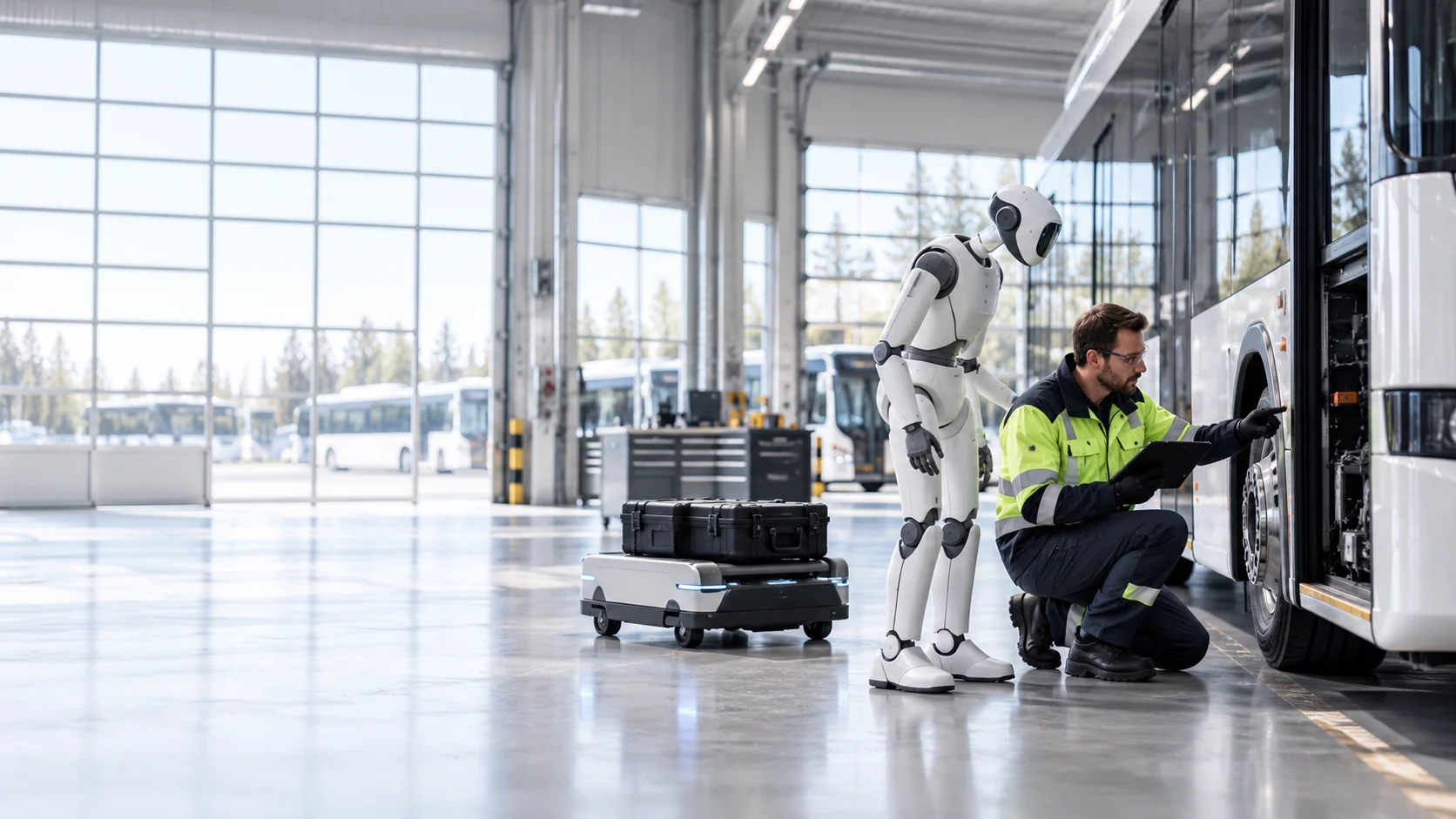
Concept illustration
Next · Questions answeredQuestions, answered
Connect vehicle readiness, service work and terminal resources to scheduled operations. Relate maintenance records, inspection findings, parts availability and access windows to the vehicle or terminal task. Systown AI proposes connecting that site context to reviewed workflows and coordinated physical tasks, with the operating scope and supported interfaces agreed for the site. Explore site context and coordination
Coordinate approved inspection rounds, parts delivery and service-team handoffs across depots and transport facilities. Select the robot, tooling and interface around the task and environment. People define the permitted scope and handle exceptions; equipment controls retain their roles. These are example workflows requiring application-specific qualification. Explore coordinated task responses
Shorter readiness delays, fewer repeat service visits and better coordination of teams and equipment. These are intended benefits of the proposed workflow, not measured customer results. Start with the operational bottleneck, agree the baseline and define the business outcome with the accountable team before expanding the scope. Discuss your operation