
Site reasoning
Process trends, manufacturing status and asset location reveal what the line needs, where it is and whether it is released.
Loading…
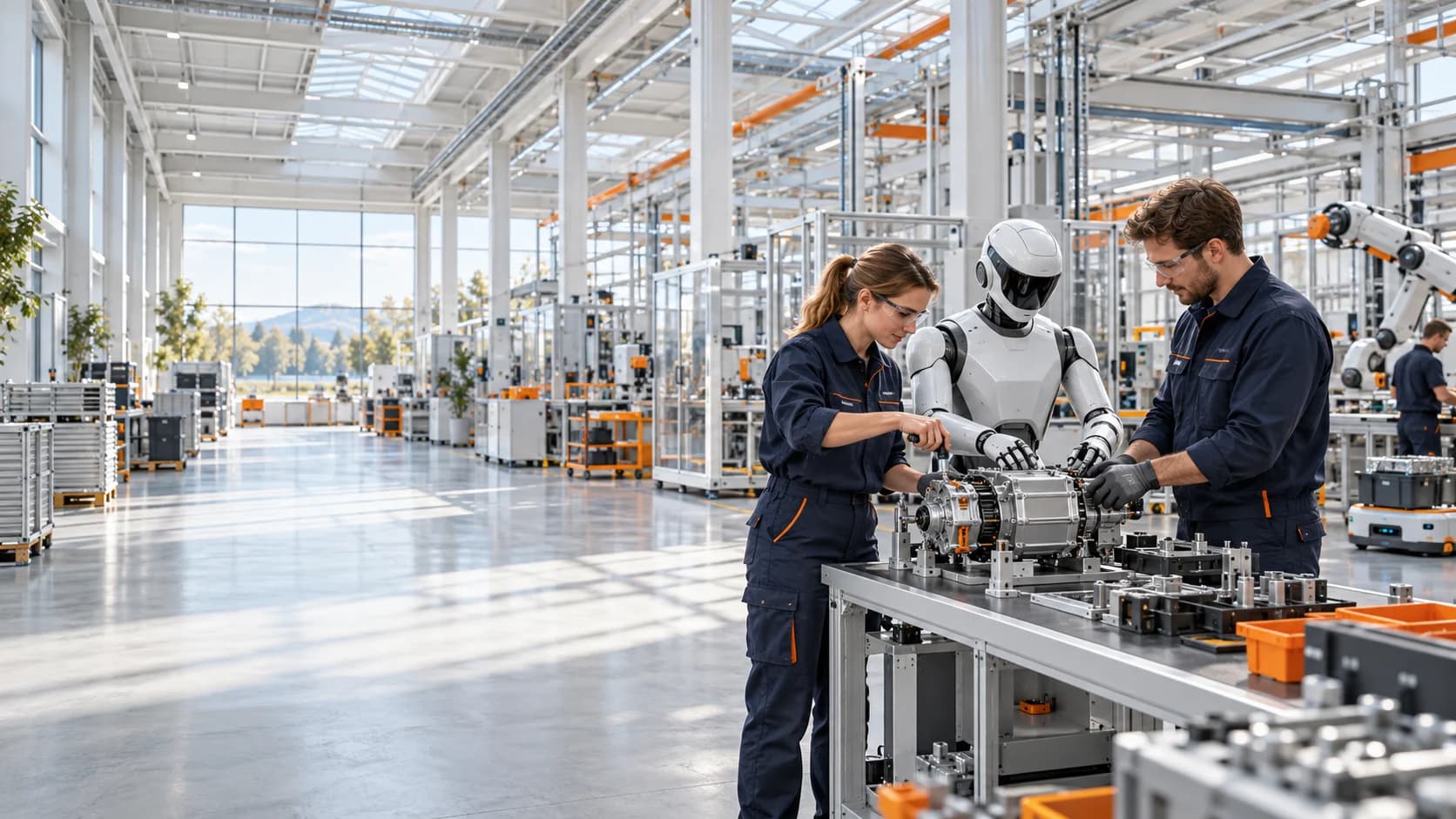
Enabling The Sovereign & Industrial Frontier
Powered by Mission Critical Agentic & Physical AI World Models & Robotics
Concept illustration · Industrial autonomy under human authority



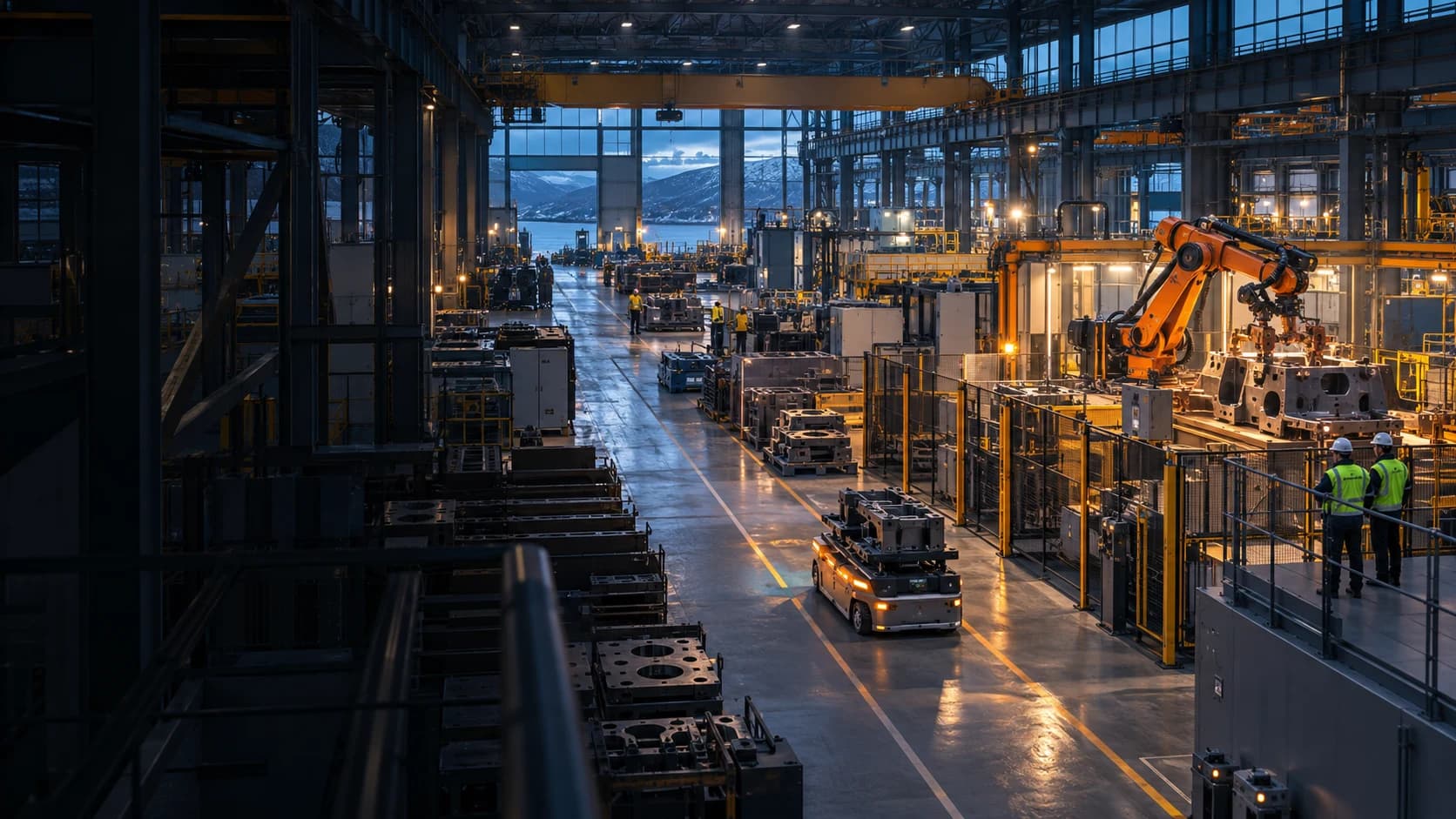
missionGRAPH · Industrial Agentic Context Platform
Process data says what is happening. Spatial intelligence says where. missionGRAPH relates both to the task, so agents and world models can evaluate the next step.
Process streams and operating history. Asset context. People and machines in place.
Relate the signals in missionGRAPH. Compare options against the task and its limits.
Check the proposal. Authorise the response. Review the outcome before improving.
Industrial Agentic AI · In practice
Connect what is happening to the work that moves your operation forward.
Process trends, manufacturing status and asset location reveal what the line needs, where it is and whether it is released.
Coordinate mobile-robot deliveries, humanoid handoffs and cobot packing support in qualified non-aseptic areas, with people managing exceptions.
Fewer material-related interruptions, shorter delivery lead times and less manual handling, with traceable handoffs.
Relate process and asset history, batch phase, lab results and equipment condition to the deviation and the evidence needed next.
Prepare an inspection, coordinate sealed sample transport or bring the right maintenance kit to the responsible team.
Faster investigations, quicker sample turnaround and better maintenance coordination to support production continuity.
Link the approved revision, material identity, fixture readiness and welding procedure to the production job.
Stage parts with mobile transport, coordinate a qualified welding cell and route inspection or rework to the right team.
Less waiting and repeated handling, smoother production flow and more complete records from material to finished work.
Combine operating history, infrastructure state and asset dependencies with access rules and service procedures.
Coordinate robot inspection rounds, instrument delivery and technician work around the affected equipment.
Faster issue triage, fewer repeat visits and more productive maintenance time in support of service continuity.
Relate supply requests, equipment locations and access constraints to the available staff and delivery fleet.
Coordinate mobile deliveries and supervised supply handoffs in back-of-house areas, with staff resolving exceptions.
Less time spent searching and walking, more reliable replenishment and more staff time available for their core work.
Relate production sequence, equipment state, quality release and part location to station demand and permitted routes.
Coordinate AMR and AGV deliveries, industrial arms, cobots and humanoid support with the assembly team.
Fewer parts-related line interruptions, better sequence reliability and less time spent on expediting and repeated handling.
Relate maintenance status, parts identity, access permissions and infrastructure observations to each support task.
Coordinate mobile transport, humanoid handling and qualified ground or aerial inspection platforms with authorised personnel.
Shorter equipment-search and maintenance cycles, clearer custody records and better use of specialist teams.
Relate water conditions, pump history and recent observations to the correct tank or pen and its operating procedures.
Coordinate dry-area robots and staff with specialist underwater or surface vehicles where the task and environment permit.
Earlier visibility of issues, faster sampling and inspection follow-up, and better coordination of maintenance resources.
Relate an alarm or inspection finding to the affected zone, equipment, access permissions and current site activity.
Prepare an evidence brief, coordinate an authorised inspection robot and assign follow-up to the responsible security or facilities team.
Faster event triage, clearer handoffs and less time gathering information before a response decision.
Relate warehouse status, item availability, replenishment needs and aisle conditions to each picking or put-away task.
Coordinate mobile carriers, autonomous forklifts, picking stations and warehouse teams through approved routes and handoffs.
Less searching and repeated handling, fewer replenishment delays and more consistent order flow.
Relate batch identity, quality release, line status and cleaning readiness to the material or packaging task.
Coordinate approved material delivery, secondary packaging and palletising with qualified equipment and hygiene procedures.
Fewer material and packaging interruptions, less manual handling and clearer batch-to-dispatch traceability.
Relate the job revision, material identity, machine state, tooling and inspection status to the next operation.
Coordinate qualified machine tending, welding, finishing and material transport, with operators managing setups and exceptions.
Less waiting between operations, more productive machine time and fewer handoff errors or repeated movements.
Relate shipment status, dock availability, material location and resource constraints to the next transfer.
Coordinate mixed fleets, loading preparation and operator tasks across picking, consolidation and dock handoffs.
Shorter staging waits, more dependable dispatch and better use of shared transport capacity.
Relate maintenance records, inspection findings, parts availability and access windows to the vehicle or terminal task.
Coordinate approved inspection rounds, parts delivery and service-team handoffs across depots and transport facilities.
Shorter readiness delays, fewer repeat service visits and better coordination of teams and equipment.
Example workflows and intended business benefits, shaped around your site and operating requirements.
Questions, answered
What it does. Why it matters. What is proven.
Explore the AI definitions →Systown AI develops missionSTACK for modelling and simulating coordinated physical operations, and Industrial Agentic AI for governed agent workflows. Based in Stockholm, the team connects operational context, bounded actions and evidence for human review. Current simulation results and architecture descriptions require separate implementation, validation and commissioning before field-performance claims. Meet Systown AI
Systown AI proposes Industrial Agentic AI for manufacturing, warehouses, logistics, transportation, food and beverage, biosolutions, healthcare operations, data centres, fish farming, security and defence. Site reasoning connects process state, asset location and operating knowledge to coordinated tasks across people, robots and machines. Business benefits depend on the workflow, equipment and approved operating scope. Explore industry use cases
Site reasoning relates process data, spatial observations and operating knowledge to the task at hand. missionGRAPH provides that shared context so agents and world models can evaluate what changed, what it affects and possible responses. Source quality, permissions and human review remain part of the decision; live integrations require site validation. Explore missionGRAPH
Hybrid autonomous systems describes the intended coordination of people, humanoids, autonomous machines, non-autonomous equipment and shared processes. Within missionSTACK, swarmCORTEX orchestrates jobs, routes and resources, while declared controls bound actions and retain human authority. Evaluate efficiency and interactions against a baseline; simulation does not establish field safety or replace equipment safety controls. Explore swarm and fleet coordination
Systown describes Connected, Protected and Sealed deployment profiles as architecture options to evaluate for each customer. Connected proposes selected SE/EU cloud infrastructure; Protected uses a controlled data centre; Sealed targets isolated infrastructure. Sovereignty means authority over models, information and actions, with the installed system required to demonstrate its boundary. Review deployment profiles
On-premises and air-gapped operation are proposed deployment profiles, not established installation guarantees. Before making an air-gap or no-egress claim, verify the selected models, isolation, logs, support access and offline updates on the installed system. A signed release package alone does not establish that operational boundary. Review the evidence boundary
The site identifies NVIDIA Inception programme membership as part of Systown AI’s technology ecosystem. Its architecture describes development on approved material and evaluation on a selected NVIDIA runtime. Provider names and programme membership do not imply endorsement, certification or a commissioned integration with NVIDIA. Read the claims policy
Start with one bounded task, approved samples, an accountable owner and a measurable result. Agree the baseline, controls, review criteria and evidence needed for the next decision. Systown’s published approach begins with an evaluation of the workflow or operation before any wider commitment or claim of field performance. Start the conversation
Start the conversation
Tell us what needs to improve. Define the result. Test the path to it.
Start your evaluation →