
Site reasoning
Relate warehouse status, item availability, replenishment needs and aisle conditions to each picking or put-away task.
Loading…
Systown AI · Warehousing
Connect stock, locations and order priorities to the people and robots handling the next move.
Relate warehouse status, item availability, replenishment needs and aisle conditions to each picking or put-away task.
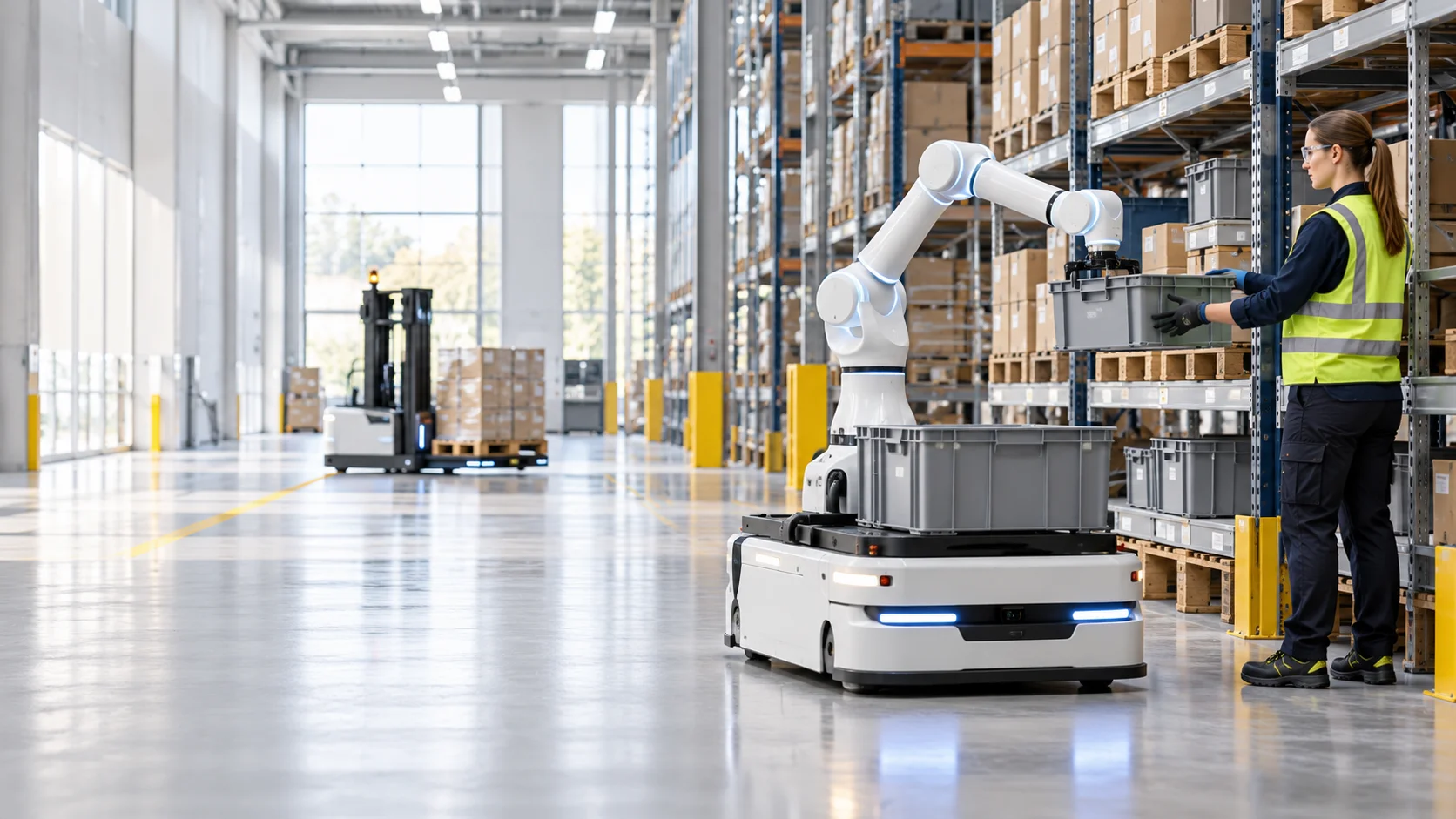
Coordinate mobile carriers, autonomous forklifts, picking stations and warehouse teams through approved routes and handoffs.
Less searching and repeated handling, fewer replenishment delays and more consistent order flow.
Example workflow and intended business benefits. The site, equipment and operating scope determine the application.
Concept illustration
Next · Questions answeredQuestions, answered
Connect stock, locations and order priorities to the people and robots handling the next move. Relate warehouse status, item availability, replenishment needs and aisle conditions to each picking or put-away task. Systown AI proposes connecting that site context to reviewed workflows and coordinated physical tasks, with the operating scope and supported interfaces agreed for the site. Explore site context and coordination
Coordinate mobile carriers, autonomous forklifts, picking stations and warehouse teams through approved routes and handoffs. Select the robot, tooling and interface around the task and environment. People define the permitted scope and handle exceptions; equipment controls retain their roles. These are example workflows requiring application-specific qualification. Explore coordinated task responses
Less searching and repeated handling, fewer replenishment delays and more consistent order flow. These are intended benefits of the proposed workflow, not measured customer results. Start with the operational bottleneck, agree the baseline and define the business outcome with the accountable team before expanding the scope. Discuss your operation